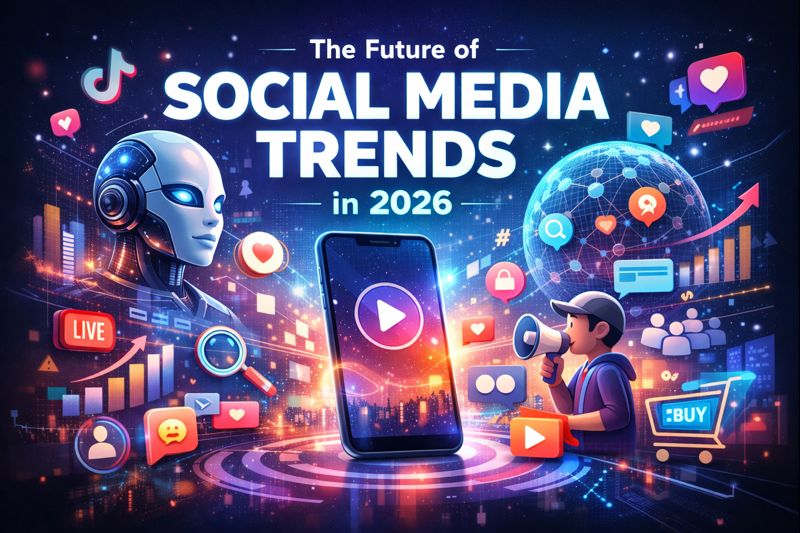
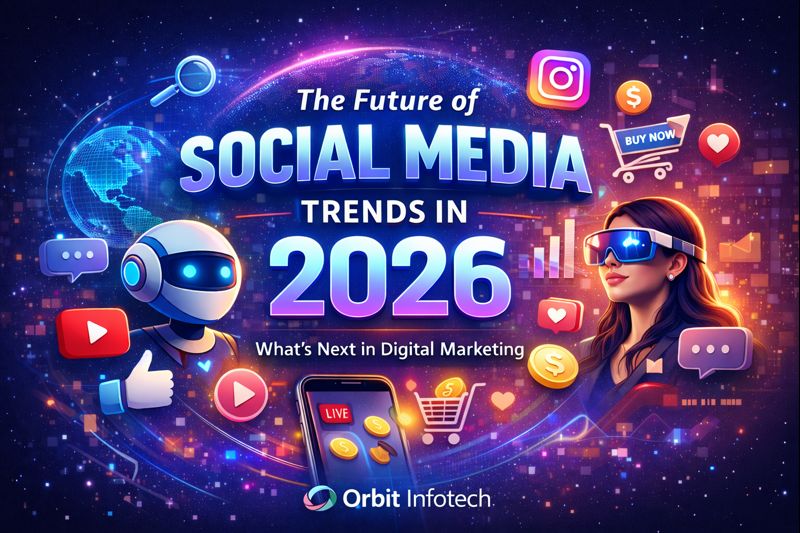
In the ever-shifting landscape of digital engagement, social media trends in 2026 are poised to redefine how brands, creators, and users connect, communicate, and make decisions online. As platforms evolve faster than ever before, businesses that adapt early gain a competitive edge — while those that cling to outdated strategies risk falling behind.
In this comprehensive article, we explore the most impactful social media trends expected in 2026, offering insights into how marketers and brands like Orbit Infotech can stay relevant, agile, and ahead of the curve. Our analysis draws on expert sources and industry perspectives, including insights from Neil Patel’s breakdown of 2026 social media predictions.
1. Social Platforms Are Becoming Discovery Engines
One of the most significant shifts in 2026 is how people use social media. Instead of simply scrolling through feeds, users increasingly turn to platforms like TikTok, YouTube, Reddit, and Instagram to search for answers, compare products, and conduct research — much like they would use a traditional search engine.
This trend means that social media content must serve real user intent. Brands that optimize posts with clear, searchable captions, and structured answers will rise in visibility and engagement. For instance, creating content that directly responds to common questions, product comparisons, or how-to guides can dramatically increase discoverability and user trust.
Key Action Items:
-
Use keyword research to uncover questions your audience is searching for
-
Optimize captions and video titles for search-like queries
-
Focus on informative content over filler posts
2. AI-Driven Personalization and Content Optimization
Artificial Intelligence (AI) is no longer experimental — it’s becoming an essential tool for social media strategy. AI models now play a major role in how content is surfaced, prioritized, and distributed. Algorithms increasingly evaluate content based on clarity, relevance, and usefulness, not just engagement metrics like likes and shares.
AI tools are also making content creation more efficient. Solutions like AI caption generators, script assistants, and editing tools help creators repurpose ideas across formats — allowing brands to produce more content without sacrificing quality.
Benefits for Brands:
-
Improved targeting through personalized content
-
Smarter optimization that aligns with user intent
-
Better performance analytics and trend forecasting
3. Short-Form Video Continues to Dominate — With New Purpose
While video has been king for years, short-form video in 2026 has evolved beyond entertainment. It’s now a preferred format for rapid learning, decision-making, and product comparisons. Users rely on short clips to get the gist of a topic or learn something new in seconds.
This means that successful short-form content is no longer just flashy or trendy — it needs substance. Educational hooks, quick tips, and concise product highlights will outperform videos that are purely aesthetic or promotional.
Tips for Effective Short-Form Content:
-
Lead with clear value in the first 2–3 seconds
-
Use text overlays for context when audio is off
-
Turn longer content into bite-sized “micro-learning” pieces
4. The Rise of Social Search
Related to the discovery trend, social search continues to overtake traditional search engines for early research and discovery. Users increasingly type questions directly into social platforms — from TikTok and Instagram to Reddit and YouTube — to find real user perspectives and immediate answers.
For brands, this means optimizing content with social-search-friendly language, hashtags, and meta descriptions. Social SEO has become a real discipline — one that mirrors traditional SEO but is tailored to the behavior and language habits of social audiences.
Strategies for Social Search Optimization:
-
Use natural language that mimics how users type questions
-
Include relevant keywords in captions and descriptions
-
Use trending but relevant hashtags to broaden reach
5. Creator-Led Trust Outweighs Traditional Advertising
Influencers and creators have been impactful for years, but in 2026 their role has transformed into a foundational trust mechanism. Users trust creators because they feel more authentic, human, and relatable compared to polished brand ads.
This doesn’t mean brands should abandon advertising — rather, they should integrate creator partnerships into every layer of their social strategy. Creator-driven storytelling builds credibility, fosters community, and drives action more effectively than traditional ads alone.
Best Practices:
-
Collaborate with creators who genuinely align with your brand values
-
Empower creators to share authentic experiences — not scripted messages
-
Track impact based on genuine engagement, not just audience size
6. Community Engagement Over Vanity Metrics
In 2026, metrics like follower count and superficial engagement (e.g., likes) are less meaningful. What matters more are real conversations, community participation, and social proof — the signals that show people trust and value your brand.
Communities show up in comment threads, user-generated content (UGC), saved posts, and direct interactions. These are the indicators that a brand has cultivated a loyal and engaged audience.
What to Prioritize:
-
Encourage and share UGC
-
Respond to comments and foster conversations
-
Create exclusive groups or spaces for your most engaged fans
7. Expanded Social Commerce and On-Platform Buying
The line between social media and ecommerce continues to blur. Platforms are making it easier than ever for users to discover, evaluate, and purchase products — all without leaving the app.
This trend means that brands must think of social media as a conversion tool, not just a visibility channel. Integrated shopping, product tags, and frictionless checkout experiences are becoming expected by consumers.
Conversion Tips:
-
Set up shopping features on all eligible platforms
-
Use product videos with clear CTAs
-
Highlight limited-time offers or exclusive bundles
8. Social Commerce Drives Revenue, Not Just Awareness
Social commerce is maturing from being a novelty to a critical revenue channel. Users are no longer just window-shopping — they’re making purchase decisions within social platforms themselves.
To take advantage of this trend, brands should:
-
Feature product tags in every relevant post
-
Use dynamic ads that link directly to shop pages
-
Highlight real customer reviews and testimonials in social feeds
9. Niche and Private Communities Flourish
As people seek deeper connections and meaningful interactions, private communities, groups, and broadcast channels are gaining popularity. This trend reflects users’ desire for ad-free, authentic spaces where they can engage with like-minded people.
Platforms like Instagram, Facebook, Discord, and others are investing in community tools that foster interaction beyond public feeds.
Community Building Tips:
-
Create brand-specific groups or channels
-
Offer exclusive content for community members
-
Host live events, AMAs, or insider chats
10. Personalization and Demographic Fragmentation
Social media behavior is no longer uniform across age groups. Younger users treat platforms like search tools. Older users might use them for news and connection. Brands must tailor content to distinct audience segments — not rely on a one-size-fits-all strategy.
Personalization Strategies Include:
-
Audience segmentation and tailored messaging
-
Platform-specific content strategies
-
Generationally relevant creative formats
11. The Continued Dominance of Video — Across Formats
Though video has been a staple for years, in 2026 it dominates across formats. Short, medium, and long-form videos all have roles — from quick explainer clips to deeper educational content.
Brands should develop a video hierarchy that addresses different intents:
-
Short clips for discovery
-
Mid-length tutorials for product education
-
Long videos for trust building and in-depth storytelling
12. Accessibility and Inclusivity as Competitive Advantages
Accessibility is no longer optional — it’s essential. Providing captions, alt text, and inclusive formats isn’t just good practice; it’s something audiences expect.
Accessible content boosts reach, improves user experience, and signals brand values — all of which strengthen trust and loyalty.
13. More Sophisticated Analytics and Measurement
Finally, as social media becomes more tied to actual business outcomes, measurement evolves beyond surface metrics. Brands focus on valuable KPIs like conversion rates, ROI, and customer lifetime value.
Measurement Best Practices:
-
Use advanced analytics and tracking tools
-
Tie social activity to real revenue outcomes
-
Optimize based on insights, not guesswork
In Conclusion — A Strategic Roadmap for 2026
The future of social media trends in 2026 is shaped by intent, clarity, community, and conversions. Platforms are becoming search engines, creators are the new trust layer, and AI is a foundational tool in every marketer’s toolkit. Brands that focus on quality, relevance, and meaningful involvement will thrive — while others may get left behind.
For forward-thinking agencies like Orbit Infotech, these trends offer a roadmap to craft smarter, data-driven, and audience-centric strategies in a world where social media isn’t just entertainment — it’s discovery, connection, and commerce rolled into one.
FAQ — The Future of Social Media Trends in 2026
Q1. What are the biggest social media trends expected in 2026?
Ans: Major trends include AI-driven content personalization, creator-led trust, short-form educational videos, social search, expanded social commerce, niche communities, and advanced analytics that connect social media activity to real business outcomes.
Q2. Will AI change how social media platforms work in 2026?
Ans: Yes. AI will shape content discovery, recommendations, ad targeting, and analytics. Platforms will use AI to surface more relevant posts, understand user intent, and filter low-quality content. Brands will also use AI for content creation, insights, and automation.
Q3. Is short-form video still relevant in 2026?
Ans: Absolutely. Short-form video remains the most consumed content format, but it has evolved beyond entertainment. In 2026, short videos are major tools for education, product comparisons, tutorials, and quick decision-making.
Q4. How is social search changing marketing in 2026?
Ans: Users now search directly within platforms like TikTok, Instagram, YouTube, and Reddit instead of using Google. This means brands must optimize posts with conversational keywords, hashtags, and clear educational content that answers real questions.
Q5. How important are creators and influencers in 2026?
Ans: Creators are more influential than traditional ads because users trust authentic voices. Brands are relying on creator partnerships for social proof, storytelling, and community building instead of just pushing ads.
Q6. What does social commerce mean for businesses?
Ans: Social commerce allows users to discover, evaluate, and purchase products within social platforms without leaving the app. In 2026, this has become a major revenue channel rather than just a brand awareness tool.
Q7. Are private online communities growing in 2026?
Ans: Yes. Users are increasingly joining niche groups, channels, and private communities for more meaningful conversations. Platforms like Discord, Facebook Groups, and Instagram Channels are growing as people seek deeper engagement.
Q8. Which metrics matter most for brands in 2026?
Ans: Vanity metrics like follower count have lost value. Real performance is measured by:
-
Conversion rates
-
Customer lifetime value (CLV)
-
Engagement quality
-
Community participation
-
Social commerce sales
Q9. How can businesses prepare for 2026 social media changes?
Ans: Businesses can adapt by:
-
Investing in AI tools
-
Partnering with niche creators
-
Optimizing for social search
-
Leveraging video at multiple lengths
-
Building private communities
-
Connecting social efforts to ROI data
Q10. Why is personalization important on social media now?
Ans: Users expect content tailored to their interests, demographics, and behavior. Platforms reward personalized, relevant content with higher visibility, and brands that adapt see higher retention and conversions.
Recent Comments